
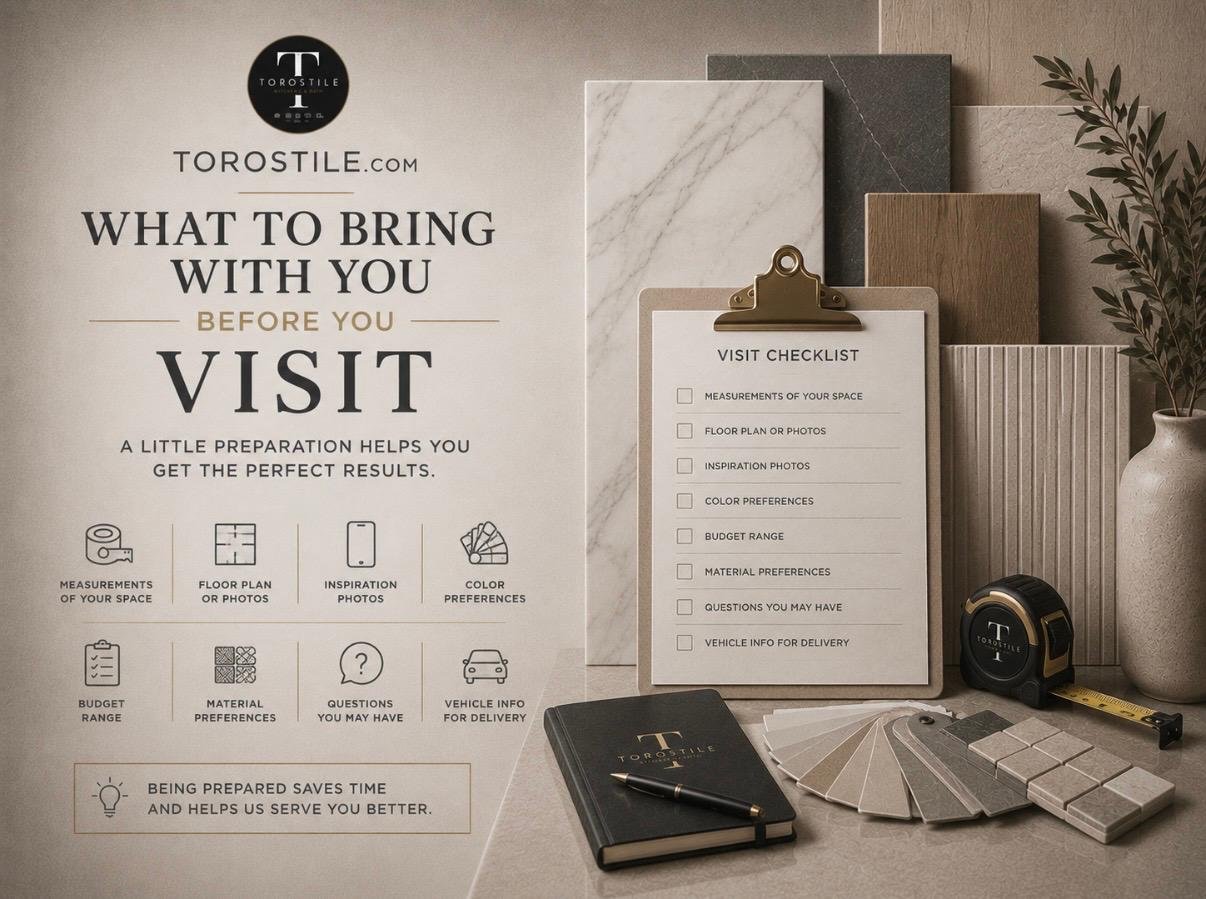
A productive tile showroom visit starts before you walk through the door. You do not need a finished design, but a few measurements, photos, and material references will help you compare the right products instead of trying to remember the room from memory.
This checklist keeps the visit focused while leaving enough room to discover better options.
Bring basic room measurements
Measure the overall length and width of the floor or each wall that may receive tile. For showers, backsplashes, niches, and feature walls, note the height as well. Mark doors, windows, cabinets, appliances, plumbing locations, and other areas that interrupt the surface.
Your measurements do not replace a contractor’s final field verification. They give the showroom team enough information to discuss format, layout, and an early material estimate.
Take clear photos and a short video
Wide photos show the whole room; close photos capture details such as existing floors, trim, countertops, or plumbing finishes. A slow video can help explain how the room connects to nearby spaces and where natural light enters.
Photograph the room in daylight when possible. If a color must remain—such as an existing cabinet or countertop—include it clearly.
Collect the materials that are already decided
Bring small physical samples whenever available:
- Cabinet door or finish sample
- Countertop sample
- Paint chip
- Wood-floor or flooring sample
- Fabric, wallpaper, or furniture finish
- Faucet, handle, or hardware finish
Physical samples are more reliable than phone photos for comparing undertones. Label anything that must be returned to a contractor or cabinet supplier.
Know the project stage
Tell the showroom team whether you are gathering ideas, finalizing selections, waiting for cabinets, or preparing for installation. Also note whether you are working with a designer or contractor and whether an installation date has been discussed.
The stage affects which decisions should be made first. For example, a countertop or cabinet selection may guide backsplash tile, while a feature tile may set the palette for an entire bathroom.
Make a short priority list
Separate requirements from preferences. Requirements might include slip considerations, easy cleaning, a particular size, compatibility with an existing drain, or a product rated for a specific application. Preferences may include a marble look, minimal grout lines, warm color, or handmade variation.
Also identify what you do not want. Eliminating glossy finishes, busy movement, cool gray, or very small pieces can save time.
Questions worth asking in the showroom
- Is this exact product approved for my intended wall, floor, wet-area, or exterior use?
- What size, finish, edge, and trim pieces are available?
- Does the material have noticeable shade or pattern variation?
- What grout joint and installation materials are recommended?
- Can I compare the sample beside cabinets, countertops, or fixtures?
- What should my installer verify before the final quantity is confirmed?
Before you leave
Photograph the back of each selected sample or write down the collection, color, size, finish, and manufacturer. Similar-looking products are easy to confuse later. If you borrow samples, keep them together and view them in the actual room at different times of day.
Bring your room notes to the Toros Tile showroom in Fairview to compare tile, countertops, cabinets, and bath materials in one place. If you already know the approximate quantities, you can also request a material quote before pickup planning.