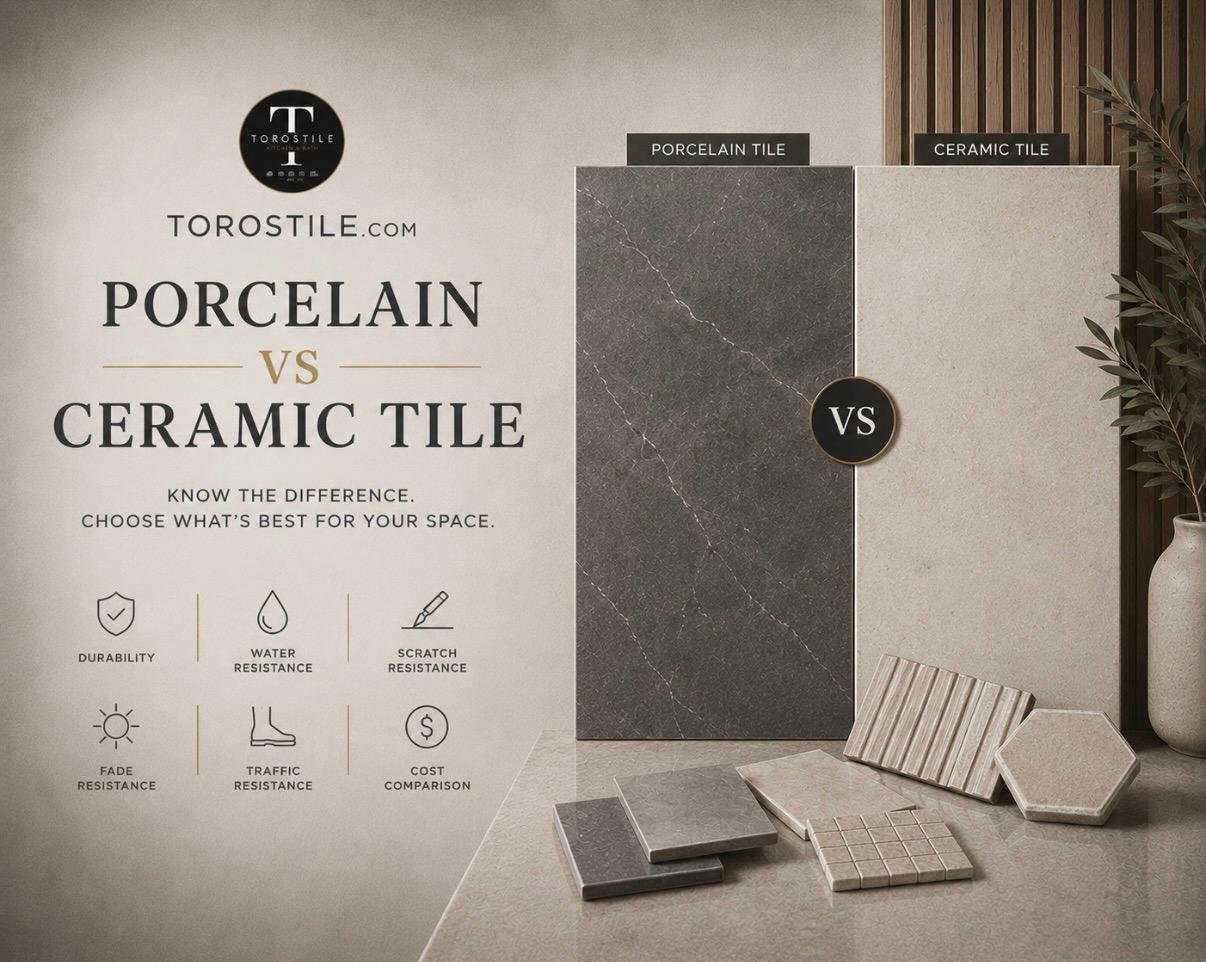
Porcelain and ceramic tile can look similar on a sample board, but they are not always interchangeable. The right choice depends less on the label and more on where the tile will be installed, how much wear it will receive, and what kind of finish you want to live with every day.
This guide covers the practical differences so you can compare materials with a clearer plan before visiting the showroom.
What porcelain and ceramic have in common
Both materials are made from clay and fired in a kiln. Both are available in a wide range of colors, patterns, sizes, and surface finishes. Either can be an excellent choice when the product is rated for the intended installation and installed correctly.
The biggest difference is usually density. Porcelain is fired to become denser and less absorbent than standard ceramic tile. That gives porcelain an advantage in many demanding or moisture-prone settings, while ceramic often remains a smart and flexible option for interior walls and lighter-duty rooms.
Where porcelain usually makes sense
- Busy floors: Porcelain is commonly selected for kitchens, entries, hallways, and other spaces that see regular foot traffic.
- Bathrooms and wet areas: Its low water absorption can make it a strong candidate for bathroom floors and shower applications when the specific product is approved for that use.
- Large-format looks: Many stone-, concrete-, and marble-look collections are produced in porcelain, including large formats that create fewer grout lines.
- Indoor-outdoor continuity: Some porcelain collections include products designed for exterior use. Always verify the manufacturer’s rating before specifying an outdoor installation.
Where ceramic tile can be the better fit
Ceramic tile is especially useful on backsplashes, shower walls, vanity walls, and other vertical surfaces. It is often easier to cut than dense porcelain, which can be helpful when a wall design includes outlets, corners, niches, or detailed trim work.
Ceramic collections also offer distinctive glazes, handmade effects, dimensional pieces, and classic subway formats. If the visual character of the glaze is the priority, ceramic may give you more of the variation and softness you want.
Do not choose by material name alone
Two porcelain tiles can perform differently, just as two ceramic tiles can. Before making a final decision, confirm the product’s intended use, surface finish, slip considerations, edge type, thickness, and available trim pieces. A polished surface that looks beautiful on a wall may not be the best floor choice for every household.
Also consider installation. Large-format porcelain may require a flatter substrate, different handling, and an experienced installer. A smaller ceramic format may involve more grout joints but simplify cuts and transitions.
Bring the room into the decision
Tile should be compared next to the other materials in the project. Cabinet color, countertop undertone, paint, lighting, and grout can all change how a tile reads. A warm white tile may appear cool beside one countertop and creamy beside another.
Bring cabinet, countertop, paint, or fabric samples when possible. At the Toros Tile showroom, you can compare tile collections with other kitchen and bath materials under the same light.
A simple way to decide
- Identify whether the surface is a wall, floor, wet area, or exterior location.
- Confirm that the exact product is rated for that use.
- Compare finish, maintenance, edge detail, and grout requirements.
- Review the sample beside the room’s other fixed materials.
- Discuss substrate preparation and installation requirements with your installer.
There is no universal winner. Porcelain is often the performance choice; ceramic can be the more expressive and practical wall choice. The best result comes from matching the product to the room instead of choosing by appearance alone.
Plan a showroom visit or request a material quote when you are ready to compare options for your project.